



































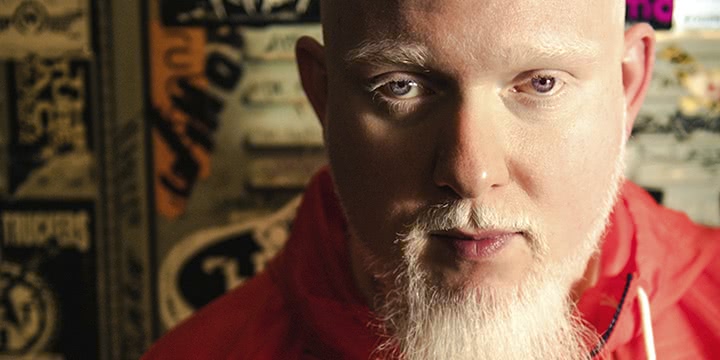

Following a low-key cassette tape release, US rapper Brother Ali caught the attention of discerning hip hop fans everywhere with his 2003 LPShadows On The Sun. The record was entirely produced by Ant (AKA Anthony Davis of the duo Atmosphere), and this collaborative partnership prevailed on Ali’s subsequent two LPs.
However, prior to his latest release, 2012’s Mourning In America And Dreaming In Color, Ali hooked up with G-Unit affiliate Jake One. Despite the change of producer, Mourning In America was no less potent than Ali’s earlier records, nabbing near-unanimous critical praise.
It’s common practice for rappers to team up with an extensive array of producers across a single album. But even with Ant out of the picture, Ali didn’t find this an appealing prospect.
“I work with people that are equally as enthusiastic about the project as I am,” he says. “Jake has been a friend since before either of us had a serious career and he always talked about doing a project together. I think it’s important to get a producer’s full attention when doing an album.”
Throughout his career, critical discussion has tended to focus on Ali’s incisive lyrical focus and vocal delivery. This is no surprise given his fierce political stance, but without engaging production it’d be difficult to get so many people paying attention.
“I choose beats that put me in a mood and then try to identify when I’ve felt that in my life,” he says. “I start writing the song to describe that moment. On a rare occasion I’ll try the words on anotherpieceof music and some really interesting magic can happen that way, but most of the time I write to the music and the songs are born that way.”
Brother Ali’s lyrics regularly dig into less-than-satisfactory aspects of American life and the ugly mechanics of the political system. These can be difficult truths to digest, causing feelings of disgust or helplessness. But despite operating within the realm of popular music, he’s not afraid to highlight issues that could scare off sensitive listeners.
“I try to be of benefit to myself, my message and my audience,” he says. “There aredefinitelytimes when I try to explain things in a way that’s understandable to the listener, but I don’t water it down for them. I respect and trust their ability to hear what Ibelieveto be true. The concern that I have is in delivering the message withprecisionand nuance. I want people to know that I love them, and hate injustice.”
While Ali’s lyrical perspective never becomes naïve, he softens the blow somewhat by injecting signs of hope and encouraging people to take a stand against injustice. “I live in a faithful, hopeful space and this allows the complete ugliness of the current state to bepalatablefor me,” he says. “It’s very cruel to diagnose darkness if you’re not willing and able toprescribeand administer light.”
Along with broader societal/political themes, several Brother Ali songs expose intimate details from his personal life. Mourning In America cut ‘Stop The Press’ is a prime example, disclosing details of departed friends and family members, strains on his marriage and his rejuvenated creative spirit after the split with Ant left him languishing.
“I include the details that I feel arenecessarytoconvey feeling and meaning. I’m down to be open with my own information. I draw the line with my loved ones’ details, though. There are things that I could share about them that would make incredible songs, but it wouldn’t be right to mine other people’s treasures like that.”
Given Ali’s huge emotional investment and unflinching activism, performing live is liable to stir up myriad emotions. And that’s exactly how he likes it. “I’ll give a song a break if I start to get a sense that I’m going through the motions and it’s justbecomingpart of the show. I have to relive those things when I do the song live.”
Considering much of Ali’s output aims to raise awareness, educate people and inspire proactive behaviour, it raises the question of whether live performance or recorded music exerts the greater power over listeners’ emotions.
“I think the connection between hearts is what changes things,” he says. “All of the evil in the world has its origin in a diseased and hurt heart. If we can connect the hearts withsomethingtrue, nothing isimpossible. I try my best in the albums and live shows to make my heart asaccessibleas possible, so that anyone whose antenna picks up on what I’m putting out can connect.”
Hip hop has historically been an effective medium for protesting against injustice and rallying activists. Although it’s easy to suggest the glory days are behind us, when he observes the state of contemporary hip hop, Ali sees plenty of men and women utilising it for this purpose.
“There are a lot of artistsoffering greatness in hip hop:Rapsody, The Reminders, Amir Sulaiman, Jasiri X and Sa-Roc are just a few. In the mainstream I think Kendrick isabsolutelynecessary right now. The dominant culture has never missed anopportunity to condemn black genius, which is responsible for every and all forms of modern music. That is, until they find a way to co-opt and steal it for their own devilish purposes. But the truth belongs to the creator and falsehood isn’t rooted in anything. Ultimatelyfalsehoodand evil survives only as long as truth allows it.”
Brother Aliappears atOxford Art Factory on Friday September 11.