


































Those who consider the concept of ‘queer spirituality’ a contradiction in terms – an ideological clash so drastic that it renders the phrase oxymoronic – would do well to head over to Performance Space’s upcoming Day For Night: 24 HRS festival.
The program features not one but three separate art pieces designed to explore the concept, a trend that fascinates the program’s director Jeff Khan.
“It’s really interesting that there’s [so many] artists wanting to explore these themes and the idea of spirituality,” he says. “There are three major projects that explore queer spirituality … We have Jess Olivieri, who has composed these two independent meditations that follow the tradition of Buddhist meditation. One meditation is focused on sex and the other meditates on death. Then we have Cigdem Aydemir, who has produced a work that really looks at the figure of the female, and Muslim traditions and Muslim identities and how they might be explored by a queer or feminist lens … And then we’ve got Holcombe Waller’s Requiem Mass.”
Of the three, it’s Waller’s piece that is being treated as the festival’s headline event, and with good reason: the Mass is a moving and memorable exploration of queer culture, a melancholia-tinged trip through the LGTBQI community’s challenging past. It’s a work that has already been performed for receptive audiences in the States.
“It’s a work that I actually saw at a festival in Portland last year,” Khan says, his voice rich with excitement. “[Waller] has been based more recently in Portland and a festival [there] commissioned this work from him … His background is as a musician – an experimental musician – and he’s quite well regarded in the States. He builds performances that have a kind of political edge to them, so they’re always interested in the idea of community in a broader sense.”
For Khan, it’s Waller’s use of Christian traditions that is so fascinating, and he finds particular pleasure in the blend of the traditional and the cutting-edge. “The work is almost an exploration of the Christian tradition. [It’s] structured in the same way as a Requiem Mass, which is a Christian musical tradition. It’s an attempt to use these religious musical forms to re-examine issues that have been ignored by religion, and to put them back into circulation. It’s about remembering the dead.”
Waller didn’t create the work in a vacuum, and the piece was born out of months of research. “He specifically did a lot of research around kind of queer communities or queer people in the 20th century … people who have lost their lives,” Khan says. “[People] who have been persecuted because of their gender or sexuality.”
Though Khan readily admits that the piece is emotionally charged, he seems eager to stress that it’s one brimming with hope; a show of solidarity and resistance rather than a sonic expression of defeat. “It’s an amazing work performed by a choir of volunteers; volunteers who have put up their hand because they have some connection to the theme, and feel moved to remember those lost.
“It’s a huge production as well. It’s very, very moving, as you can imagine with the subject matter. The beautiful presence of such a large choir in the space – all of the emotion and the forgotten history – it’s a very emotional and…” he searches for the word. “And beautiful. Very beautiful.”
Aside from Waller’s Mass, the festival will also showcase a new performance piece devised by Emma Price, 24 H(our) Diner. No stranger to the festival or its program, Price worked alongside Khan for a number of years as a co-curator, choosing 2016 to step out from behind the scenes and into the spotlight.
“For the last two years Emma was my co-curator for Day For Night,” Khan says, his tone noticeably growing warmer as he begins talking about his colleague. “We really put the program together very collaboratively and this year I wanted to see if she would be interested in this time participating as an artist. As well as being a really great collaborator she’s a really, really great artist.”
Price’s work is an examination of one of the festival’s other major themes: the fourth dimension itself. A “constantly changing installation”, 24 H(our) Diner is designed to provide a unique experience for each and every festivalgoer who visits it. Sometimes it’ll be a quiet space of reflection; other times it will be a party, a swinging American diner featuring the likes of Cindy Pastel (the inspiration for Priscilla, Queen Of The Desert) standing in as wait staff.
“The subtitle [for the festival] we almost have is, ‘A Journey Through Queer Space And Time’,” Khan says. “It’s an exploration of sort of what queer space and time is and what it might become. [It’s a] constant flow between performances and parties and lectures … It’s about changing what people think about queer culture.”
For Khan, Day For Night isn’t just a one-off event, or an isolated exploration of a marginalised community – it’s a celebration of complexity, a charged attempt to redefine contemporary classifications. “The idea of queerness is very much linked to the idea of diversity. And rather than using more conventional ideas about gay and lesbian culture, ‘queerness’ complicates all that,” he says. “I think we’re more complicated than simple binaries.”
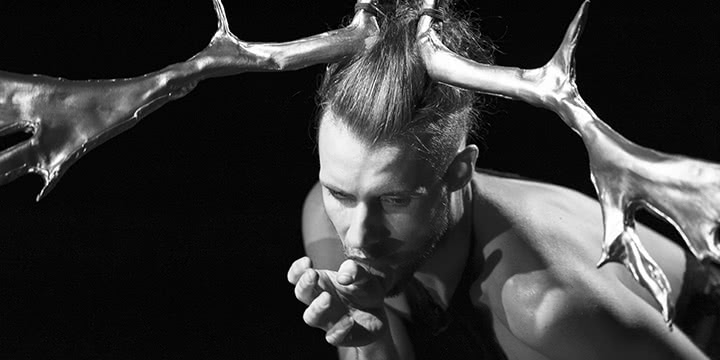
[Day For Night photo Amanda James]
Day For Night: 24 HRS takes place at Carriageworks, Saturday February 20 – Sunday February 21.