



































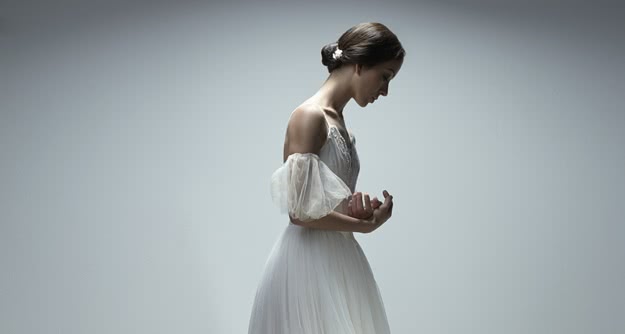

Ty King-Hall, principal dancer with The Australian Ballet, is carrying a lot on his shoulders. The company is about to reprise its celebrated version of Giselle, and King-Hall is performing the male lead, Albrecht.
“Albrecht is an interesting one,” he tells us over a coffee in the deli at the Australian Ballet Centre in Melbourne. “It’s different when you interpret the role yourself. The story is one of a peasant girl who falls in love with a man she believes is a peasant as well, but he’s really from the nobility. A lot of people see him as a cad, initially, who’s really in it for a little bit of fun; he doesn’t take it too seriously. Giselle is warned by her mother not to fall in love. Albrecht is already betrothed to a princess, Bathilde. Giselle has a delicate heart.”
The original Giselle premiered in 1841 and has been one of the world’s best-loved ballets ever since. “This ballet is one of my favourites of all time,” says King-Hall. “It’s the traditional romantic ballet, up there with Swan Lake. The role of Albrecht is rewarding; the character goes through a lot. Not every role you perform has that many dimensions. It’s a role I’ve wanted to perform for a very long time.”
King-Hall has appeared in Giselle before, but as a lowly peasant – something he says helped give him a unique way into the dance. “You get a different perspective from back there onstage; you’ve got the best seat in the house. I draw on those memories with my own interpretation. There are different ways to approach the role. You could see Albrecht as wanting to avoid the pressures of the nobility and of his arranged marriage. By the end he could be genuinely in love with Giselle. Or you could see it as a man who’s in it for fun and didn’t know the danger. Act II is his redemption; it’s a powerful transformation of the character. That’s the great thing about ballet, that freedom for interpretation. The steps are set in stone, sure, the choreography is what it is, but there are slight differences with interpretations. There’s an artistic side for you personally as a performer when it comes to your own acting.”
The company is enjoying the presence of former artistic director Maina Gielgud while it prepares the show. “It’s been in our repertoire since she was the director,” says King-Hall. “It’s her version we do, her styling. It’s fantastic that Maina is here – she’s here with us in the room, she’s working with us, working with us to stage the production.”
King-Hall has been dancing since the age of seven, growing up in rural New Zealand in a small town called Warkworth, north of Auckland. It’s not an environment you’d immediately expect to foster a principal ballet dancer. However, King-Hall had encouraging parents. “My parents have an athletic background,” he says. “I fell into it. I was lucky – when my mother found I wanted to dance, she took me to ballet school; she started taking me to see the Royal New Zealand Ballet. For some kids it’s still hard. Ballet is not as institutionalised for guys as it is for girls; as a choice, it’s not as cut and dried for boys. Most little girls have a moment where they want to be a ballerina. Guys find their way to ballet by accident, by going along to their sisters’ classes or going along with a friend or hanging around with their sisters. Every guy’s got a different story. But dance is a lot more mainstream now – there’s a lot more dance and it’s got more of a public profile. People understand that you can’t have ballet without the pas de deux [duet]; that the male dancer is an integral part of it. You have to have guys doing it. I’d encourage as many guys to take it up as possible.”
Giselle is on at theJoan Sutherland Theatre, Sydney Opera House,Thursday April 2 – Wednesday April 22.