



































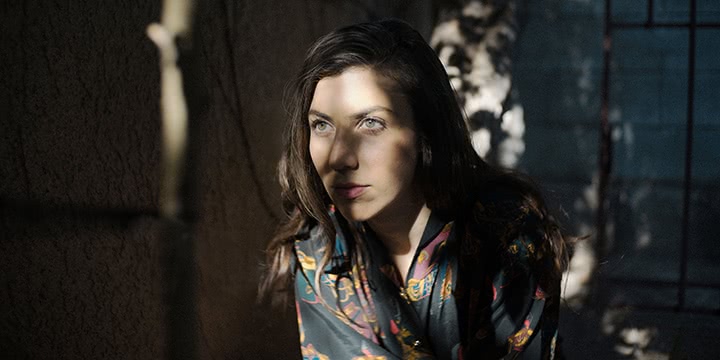

LA singer-songwriter Julia Holter caught a lot of listeners by surprise this year with her album,Have You In My Wilderness.
To those who haven’t followed her career, the record seems to have come out of nowhere to universal critical acclaim, but it’s been a surprise to those who have followed Holter over the course of her previous three albums as well. Her first record, Tragedy, was based on a Greek play from the fifth century BC and was as difficult a concept album as that suggests. Her second, Ekstasis, had no concept and was a much more welcoming listen for new ears. But immediately after that, she released another dense conceptual work: Loud City Song, based on the novel and musical Gigi. It seemed like Holter was turning inwards again, even though it was her first album recorded with other musicians rather than crafted entirely on her own in the bedroom.
Have You In My Wilderness, album number four, is surprisingly outwards-looking. There’s no central theme, although literary characters do crop up – one from Colette’s novel Chance Acquaintances, Sally Bowles from The Berlin Stories and Cabaret – and instead what holds it together is a new element in her sound. Her early work experimented with twisting up traditional classical instruments, plenty of strings and a whole lot of reverb, then adding jazzy instrumentation on Loud City Song. Now she’s still working with that core, but in a much more rhythmic way. The humble drums have proved essential to her new songs, making them feel lively where older songs were stately, and even when drums are absent, other instruments take up the slack to propel them ever forwards.
“A lot of these songs really require a band, I think,” Holter says, summing it up simply. Though she started out performing entirely solo, these days she has a drummer, bass player and a violinist who also sings as part of her band. “At this point I’ve been playing with other people for three years now. I do do solo shows though, and I like them a lot, but it’s just different.”
Holter is comfortable no matter which format she performs in, and always has been, in a way that’s surprising for someone whose music started out as a bedroom project of a very personal kind. “Performing for me has always been natural,” she says. “It kind of weirds me out – I don’t know why it is, because I’m not seriously introverted but I am more of an introvert, not super social or whatever – but I love performing for some reason. I’m not really sure why.”
Part of it is perhaps that Holter’s songs aren’t really about her. Even when they’re not based on existing fiction, there are stories to the songs and roles she plays. “I would say I play a character,” she says. “I think that’s what most people do, even if they aren’t aware of it. I feel like even if you’re singing a song about your life, it’s not like talking to somebody. If you go up on a stage and perform, for me, unless it’s for a political cause, it’s not a form of communication. It’s usually a sentiment that’s being expressed and it’s not addressed to a particular person.”
That’s an unusual idea, but one that matches her music, which takes characters and stories and boils them down to moods. There are no morals to be imparted at the end of Holter’s songs, just feelings. “Usually you’re performing for a group of people and there’s this thing being exchanged, but it’s not exactly communication,” she says. “I think in the same way, you’re not your own person, you’re something else – just like the audience themselves are not like separate people that are receiving information from you, they’re this mass of listeners that are having all their own experiences.”
To fuel her songs, sometimes Holter will go looking through books, but not in a methodical way. “Sometimes when I’m writing lyrics I flip through random anything, just looking at words and looking at sentences, completely random – just going from one page to another, different random pages. [It] kind of gets the creativity moving a little bit. The thesaurus is also useful.”
Holter’s most recent music has been a score for the boxing film Bleed For This, still telling a story, but this time purely instrumental. “It’s very simple music – I’d say a kind of dark, bluesy piano and then there’s some string pads,” she explains. The downside to the success of her new album is that she’s been on tour so much she hasn’t been able to make it to any of the screenings yet.
To get an idea of what the next song Holter writes might sound like, I ask what she’s reading right now. It’s The Palace Of The White Skunks by Reinaldo Arenas, which she describes as “really intense and difficult to read”, and if it serves as inspiration for any of her future songs, you’ll know because they’ll be sad as hell.
“It’s really depressing and hits you over the head with really depressing and bleak situations in a surreal way. It’s interesting suffering through it, because it’s painful to read. Sometimes that’s OK – I think things are just painful and miserable and that’s the way some art is, and it should be that way.”
[Julia Holter photo by Tonje Thilesen]
Have You In My Wilderness is out now through Domino/EMI, and Julia Holter performs atNewtown Social Club on Wednesday December 9.