



































Around 40 years ago, a young Neil Barnes stood hypnotised in a record store, surrounded by his equally dumbstruck mates.
The object of their fascination? David Bowie’s Diamond Dogs. Or, more specifically, an object depicted on its cover.
“Originally, the [cover] of it had sort of, uh…” Barnes pauses. “I don’t know if you’ve seen it, but it had almost like a… basically just like a cock on it,” he says, his hesitation the auditory equivalent of a blush. “We were really impressed. As kids we were like, ‘Wow, that’s pretty radical.’ It was airbrushed out later, apparently.”
When he actually listened to the record Barnes was blown away again, this time by Bowie’s musicianship rather than his proclivity for the shocking. But his connection to Bowie didn’t end with Diamond Dogs spinning on the record player. Almost two decades after the album’s release, Barnes – then recording with Paul Daley in the influential electronic outfit Leftfield – would find himself remixing the Thin White Duke’s ‘Jump They Say’, an experience he retrospectively described as “the pinnacle of our remix career” in an emotional tribute posted after Bowie’s death.
This sense of repetition informs Barnes’ life: his personal history is filled with strange reoccurrences and odd symmetry. Not that the young teenager standing in a London record store could have known what his future held, of course. For that adolescent, a career in music was a thing of fantasy.
“It took a long, long time for me to think about [being a musician]. You know, I was toying with it, and I thought maybe I might want to do it. But being a musician didn’t feel like a real thing back in those days, to be honest with you. I was in bands and stuff like that, but I didn’t really think that it would be a career.
“Everyone wanted to be in a punk band,” he says simply. “But it was a long time after that before I felt it could be something I could do. It wasn’t until the late ’80s, and even then I was making underground records. I never thought that that would provide a living either.”
If Leftfield’s beginnings sound unglamorous, that’s because they were. In the early days of the band Barnes and Daley didn’t even want to tour – news that might come as a shock to those who have heard tales of the pair’s raucous, infamously loud performances. After all, this is the band that quite literally brought down the roof of the Brixton Academy, their speakers dislodging plaster in the ceiling not once but twice.
“The actual performing live thing was something we didn’t want to do. At all. It wasn’t why we made the music. The music was meant to be something that was anti all that. We didn’t go live until ’97, actually. It took some time to turn Leftism [the band’s 1995 debut] into something we could do live. It was a real process of working out what we could do.”
When the time did come to start performing, to say Barnes dreaded the experience is perhaps an understatement. “The first show we ever did was at a club called the Paradiso. It was the most nerve-wracking moment of my life, I think. I can’t actually remember the gig at all apart from walking out onstage.”
When Barnes is asked what makes a good gig for him personally, he takes some time to answer. “I preferred being in the studio. For me, Leftfield is a studio outfit. The records are really important … But I think more than anything it’s audience response.” He goes on to reveal he thinks the concept of a ‘good gig’ is a nebulous thing in the first place.
“The funny thing is, quite often we’ll come offstage and we’ve all had different gigs. It’s technological music: it’s not like we’re a live band, in the sense of being a rock’n’roll band. We’re often in our own little spaces. Quite often Adam [Wren, Barnes’ some-time touring mate] will come offstage and I’ll be smiling and he’ll go, ‘Oh, that was hell, wasn’t it?’ And I’ll go, ‘No, I thought it was great!’”
On top of that, even after all these years, Barnes is still haunted by performance anxiety. “We went back to the Paradiso last year, in December. It was the first time we had been back for all those years, since the debut. And I was nervous that time as well. So nerves stay with you. Nerves are an essential part of this process.”
There’s that repetition again, a repetition even more curious when one realises loops and reoccurrences are the key to all of Leftfield’s releases, from Leftism up to last year’s Alternative Light Source, recorded after almost two decades of silence and without Daley. So what exactly did draw Barnes back to the studio after all that time away? He responds quicker to this than any other question, implying that perhaps it was an easy decision. “It was an element of doing the touring in 2010. We wanted to be playing new music rather than old music. We were largely playing old stuff. Even then, it was nearly close to 20 years old. So I wanted to come back and do a new record and feel more excited about playing that live.”
When Barnes did return to the studio, he had a vague blueprint of the direction he wanted to take, rather than an exact plan. “I [had] an idea in my head of how I’d like it to be. But there’s largely a lot of discovering along the way. The serious work didn’t really begin till the last year of making it. There have never been any hard and fast rules with Leftfield. It’s always been about making something work with what you’ve got.”
Even with Barnes’ wealth of experience, Alternative Light Source didn’t come easy. “It was a really hard record to make,” he says. “As I’ve always found making records to be. It’s a painstaking process. Enjoyable, yeah – there are enjoyable moments in it. But there’s an awful lot of work to be done to get it to the final stage.”
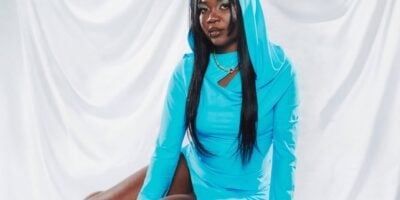
For Barnes, the real fun comes from collaboration. Alternative Light Source features a number of guest spots, from TV On The Radio’s Tunde Adebimpe to the Sleaford Mods. That said, arguably the most important vocalist is Barnes’ own daughter, Georgia Barnes, the musician behind the highly acclaimed and self-titled Georgia, released on Domino last year. When Barnes speaks of his daughter’s record, he sounds less like a father and more like an impressed contemporary. “[Georgia] is stunning. It’s really, really stunning. She’s done it all herself. Wrote all of it, played on nearly all of it. It’s a wonderful record.”
It’s not hard to see Georgia Barnes’ choice of career as an additional case of history repeating itself. It’s another Neil Barnes-esque, Leftfield loop, particularly given that when she began work on the record, Georgia was only a few years older than that young man standing in a London record store, Diamond Dogs grasped in his hands.
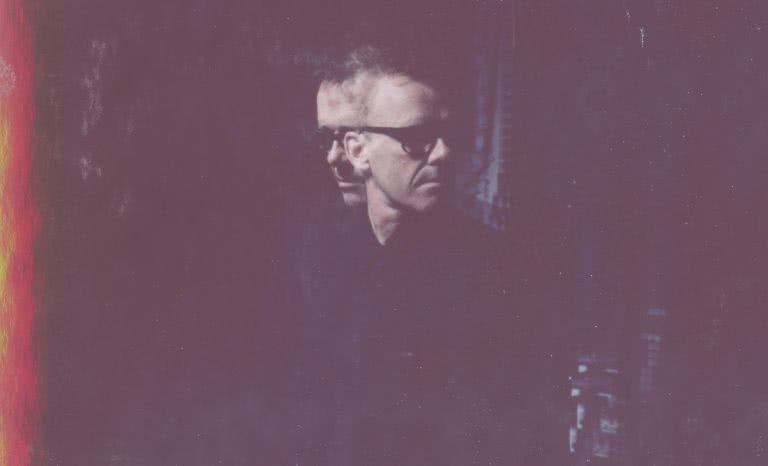
[Leftfield photo by Dan Wilton]
Leftfield performs at the Metro Theatre on Monday February 22.Alternative Light Source is out now through Infectious/Liberator.