



































When people hear the term ‘Mardi Gras’, it tends to conjure images of a glorious parade that dazzles the senses and a long night of carefree partying.
And although these aspects really are worthy of celebration, there is also more to the Sydney Gay and Lesbian Mardi Gras, andLGBTQIculture, than what mainstream television feeds depict. Samuel D. Hunter’s The Whale highlights the real struggles that can be experienced when you’re a minority – in this case, an obese gay man living in the Bible Belt of America – and explores the kind of melancholy normality that is rarely afforded to non-straight characters on the stage. Director Shane Anthony explains why pieces such as The Whale are imperative to Mardi Gras.
“The Whale is about an extremely obese man living in Idaho in America,” he says. “My take on it is that there is trauma that has happened to him so deeply that he is stuck in the past through fear. The play takes place when he starts to reconnect with people from the past that he hasn’t seen for ten years – mainly his daughter and his ex-wife. He’s gay, and when he realised that, he broke up with his wife and didn’t have any contact with them after. He’s now in the last five days of his life because he’s dying and he wants to make sure that his daughter has the future that he never had, but everything falls apart.”
Unfortunately for this character, losing his family wasn’t the only trauma that guided him down a path of self-destruction and towards his death.
“There was a particular event that was the catalyst for him gaining weight and becominga recluse, which was the passing of his partner, Alan,” Anthony says. “There is an implication that it was a direct result of his involvement with the Mormon church and coming out as gay. Subsequently Alan died because he starved himself to death, which resulted in the main character, Charlie, eating himself to death.”
A great deal of research went into this production of The Whale, so that the actors and Anthony himself could connect to Hunter’s story, and portray both the setting and the characters in a way the audience could relate to.
“We looked at a lot of different stories that related to the five characters in this piece,” the director says. “I can see elements of a low socioeconomic environment and the fallout that can occur due to trauma from the past. We have actually referenced films from the UK, Australia and America as part of research about certain characters who essentially are not coping, have kept secrets and as a result are kind of like a time bomb just waiting to go off.”
Although the particular circumstances of these characters may not be familiar to everyone, the rejection of people from a church community due to their sexual orientation is something a substantial number of LGBTQI individuals have to suffer through. In addition to the fear of losing their friends, family and the network they have been surrounded by their entire lives, they also have to cope with the idea of losing their god. “That’s right,” Anthony agrees, “and that isn’t spoken about or put onstage much – especially that collision between sexuality and church, especially within Mormonism, which has a very specific perspective on sexuality.
“In this broader sense, The Whale is about a broken family and it’s all within the context of middle America – and dare I say, having spent a significant chunk of my life living there, it can be pretty interesting in the Bible Belt. Religion does play such a huge role, especially in Idaho, so it’s controversial and challenging for someone to break away from their marriage because they’re gay.”
Keeping this in mind, it is perhaps more imperative than ever that stories revolving around isolation are told during festivals like Mardi Gras, which in addition to being a celebration of culture, is also about inclusivity and raising awareness.
“I’m really interested to see who the audiences will be when they come to see The Whale,” says Anthony. “It’s not your muscled guy onstage and it’s not looking at that one aspect of gay culture that we already know so much about and hear so much about.
“It’s looking at another aspect of that community, and people who feel disenfranchised and isolated, predominantly because it can be so looks-orientated. Charlie is isolated because of his weight, both physically and metaphorically. That’s what is really interesting about the piece for me – it gives these people a voice and puts some diversity on the stage, and shows that it isn’t a black-and-white kind of community.”
The play also highlights people’s misconceptions and assumptions regarding weight and aesthetics in general.
“The playwright, Samuel D. Hunter, set a challenge for himself. He wanted to create a play where audiences walked in on a character and [would] be disgusted, but by the end they would have warmed to him, and I think The Whale does that successfully. It’s confronting to see someone who is that size – it brings up a whole lot of issues about lack of willpower, lack of control, and there is definitely a level of disgust associated with it. So I’m hoping that the audience will be confronted, but that they will see more than just the flesh, and actually see a human being.”
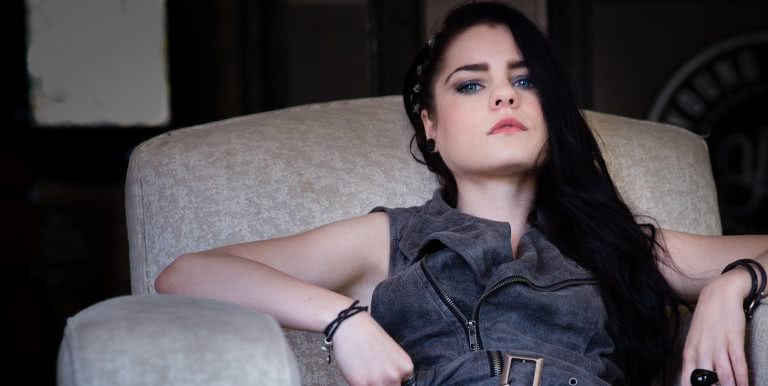
[The Whale photo byKate Williams]
The WhalerunsTuesday February 2 – Friday March 4 at the Old Fitz Theatre.