



































Australian and New Zealand films have been returning to wagers, games and bad bets for decades. Usually, the game itself is not the whole point. Risk is useful on screen because it exposes character quickly. Put somebody in front of a choice with a visible price and you find out how impatient, desperate or convinced of their own luck they really are.
That is why the strongest examples do not look much like one another. An outback nightmare, a period romance, a Sydney gangster film and a New Zealand country comedy can all use gambling without turning into stories about gambling in the narrow sense.
Wake in Fright Turns a Game Into a Trap
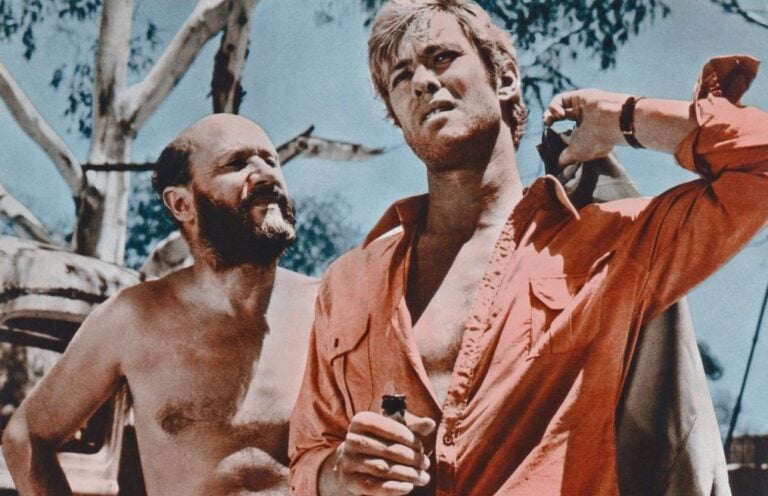
Wake in Fright (1971) contains one of Australian cinema’s most memorable gambling sequences. Schoolteacher John Grant reaches the mining town of Bundanyabba on his way to Sydney and is introduced to two-up. He wins, keeps playing and then loses the money he needs to leave.
The scene works because the game is not treated as a glamorous detour. It becomes the mechanism that strands Grant in the Yabba and pushes the story into its increasingly ugly spiral of drinking, violence and humiliation. A few throws of the coins change the direction of the entire film.
Oscar and Lucinda Makes Risk Romantic
Oscar and Lucinda (1997) takes almost the opposite approach. Gillian Armstrong’s adaptation of Peter Carey’s novel brings together two people who share an obsession with games of chance. Their attraction is tied to risk from the beginning and eventually becomes bound up in the enormous wager surrounding a glass church.
Here the wager is not a background detail. It is part of how the characters understand faith, ambition and each other. The film turns risk into something romantic and reckless at the same time.
Dirty Deeds Makes Gambling Part of the City
Dirty Deeds (2002) moves the subject into organised crime. Set in Sydney in 1969, the film follows Barry Ryan, played by Bryan Brown, as profits from the city’s poker machine trade attract the attention of American gangsters.
Love Film & TV?
Get your daily dose of everything happening in music, film and TV in Australia and abroad.

The machines and clubs are part of the film’s criminal economy rather than a personal hobby. They become shorthand for money, territory and a particular version of Sydney that is changing as American influence arrives.
New Zealand Cinema Has Its Own Version of the Bet
Across the Tasman, Came a Hot Friday builds a comedy around two conmen cheating bookmakers at racecourses before their luck catches up with them in a small New Zealand town. Horse racing, bookies and an illegal gambling room are not decorations around the story. They are the machinery that keeps the plot moving.
Stickmen (2001) finds another version of the same idea in Wellington pub culture, following three friends into a high-stakes pub pool tournament and the darker world surrounding it. Again, the attraction is not a lesson in how to play. It is what a wager does to friendship, confidence and judgement when the pressure rises.
These films also capture how specific the language of gambling can be to a time and place. Two-up rings, country bookmakers and pub pool all locate a story culturally before much else happens. Contemporary New Zealand-facing gaming material uses different terms, including online slot formats, but that belongs to a separate commercial and regulatory world from the films above.
Risk Is the Part That Lasts
What lasts on screen is not the terminology but the dramatic job of risk. Gambling gives writers and directors a compact way to show character under pressure. The game can be public, but the reason somebody keeps playing is usually personal.
That is why risk keeps resurfacing in Australian and New Zealand screen stories. The details change from two-up to poker machines, horse racing and pub pool, but the dramatic question stays much the same: what happens when somebody decides the next move is worth the price?