



































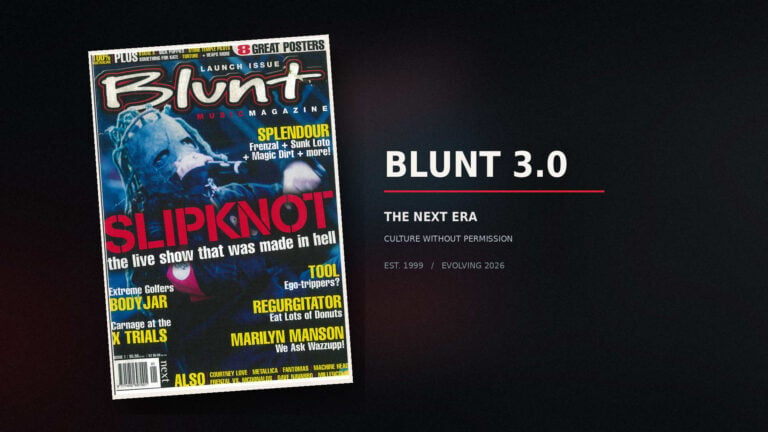

In 2001, Slipknot appeared on the cover of BLUNT Magazine’s first full issue. Inside, journalist Mark Hughes spoke to Corey Taylor backstage at Ozzfest as the band prepared to release Iowa. The interview survives in BLUNT’s archive: an encounter with a band whose next chapter was still unwritten.
Twenty-five years later, a very different kind of exchange placed BLUNT in front of an international audience. Yungblud singled out an article challenging accusations that he was an ‘industry plant’, quoting its headline in an Instagram comment and writing: ‘This made me feel happy.’ NME reported his response.
A physical magazine and a pinned comment inhabit different media worlds. Yet both suggest why a specialist publication can matter: it gives people more than the announcement, publicity image or prevailing opinion. It offers a way into the artist and the culture around them.
That connection is the starting point for BLUNT 3.0, the publication’s developing expansion into a broader cultural media network. For publisher Joel King, the task is not to discard its musical identity. It is to give that alternative perspective more ground to cover.
BLUNT publisher Joel King describes the expansion this way: “BLUNT grew out of alternative music, but what made it matter was never only a genre. It was identity, discovery and belonging. BLUNT 3.0 takes that perspective into a much wider cultural world.”
A publication you put on your wall
BLUNT’s story began with a poster magazine in 1999, before the full-publication launch in 2001. Punk, metal, hardcore and alternative rock sat at the centre of its identity. Its own history describes a publication interested in the artists and communities operating beyond conventional expectations.
The physical object was part of the appeal. Posters could make a bedroom feel like somewhere you belonged. Covers gave faces to a scene. Interviews supplied the details that turned an unfamiliar name into a band someone would follow for years.
The archive captures those relationships as they developed: Green Day preparing American Idiot in 2004, My Chemical Romance during their ascent, and Parkway Drive’s first BLUNT cover in 2007. These were conversations conducted before hindsight made the significance of each period obvious.
That gives the material a value beyond nostalgia. An archive can preserve what artists were trying to do, what audiences cared about and how a scene understood itself at a particular moment. It can complicate the simplified history that develops later.
BLUNT’s cultural identity was never simply a list of genres. The common thread was the relationship between creative work and the people who used it to express themselves. That is a broader foundation than a category on a record-store shelf.
Changing the format, keeping the instinct
The idea of a wider remit predates the current rebuild. In October 2015, Nextmedia announced BLUNT’s digital shift with an expanded scope including games, film, television, clothing, gadgets and tattoos. Its posterbook series would remain in print. The medium was changing; the audience’s interests had already moved beyond music alone.
In 2019, Mike Hohnen and Peyton Bernhardt’s The Complaints Department acquired the brand ahead of its 2020 relaunch. King acquired BLUNT’s intellectual property and brand assets in 2024 and led another redevelopment and relaunch in 2025, according to the publication’s ownership record.
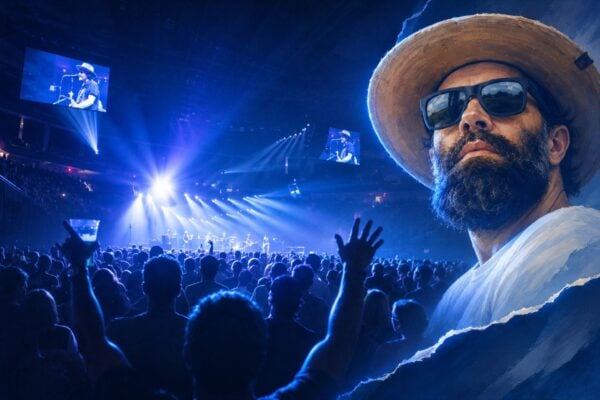
That work was already underway when King left his full-time executive role at Vinyl in September 2025. B&T reported the transition, noting his previous senior commercial and operational roles across Vinyl and The Brag Media and his intention to focus on his own projects, including BLUNT.
The newer approach connects publishing with the conversations happening around it. King’s personal social presence, BLUNT’s channels and its city-based music communities give the work routes beyond the website. The commercial and operational experience sits alongside an increasingly visible role in reporting and commentary.
In June 2025, BLUNT reported more than 50 million views across its owned sites and social platforms for the month. That was a self-reported, combined distribution figure—not 50 million unique readers—but it indicated the scale at which its stories could circulate.
Finding the people inside the story
In November 2025, BLUNT followed the cancellation of Amyl and the Sniffers’ free Federation Square performance and the band’s decision to redirect its $35,000 fee into bar tabs at seven Melbourne venues. The response connected a disrupted major event with the smaller rooms that sustain a music community.
With AC/DC and Metallica also drawing attention to Melbourne’s live-music calendar, King examined the pressures facing grassroots venues beneath the stadium spectacle. The interesting question was not only who could fill a stadium, but what happened to the places where future headliners began.
A month later, a beach ball produced a different flashpoint. After Garbage singer Shirley Manson confronted an audience member during Good Things Melbourne, BLUNT interviewed the fan, Ben O’Brien. The conversation supplied a first-hand account from someone who was otherwise becoming a character in a viral clip.
BLUNT subsequently reported that the controversy helped drive more than 20 million views across its platforms in three days. The number describes distribution. The interview explains the editorial contribution: finding a person whose perspective could otherwise be lost beneath the argument.
Both episodes demonstrate a useful journalistic instinct: recognising when the most revealing voice is not the most prominent one.
Following the story past the statement
BLUNT’s Parkway Drive coverage involved much more serious stakes. On 20 March 2026, King reported a NSW court matter involving Jed Daniel Gordon, a former merchandise and touring associate of the band. The initial report distinguished the existence of court listings from details that had not yet been independently confirmed.
The next day, Parkway Drive confirmed Gordon’s guilty plea to a sexual offence involving a minor and said his contract had been terminated. The initial statement already acknowledged responsibility for contracting him and his more recent involvement in the online merchandise team. Rolling Stone Australia explicitly cited BLUNT’s reporting.
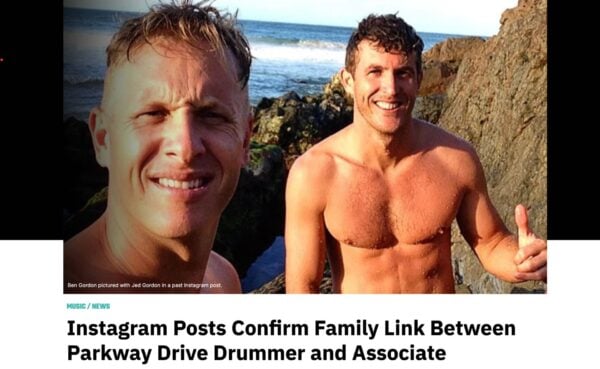
BLUNT continued examining the record, publishing archived social posts identifying Gordon as drummer Ben Gordon’s brother, a relationship not mentioned in that first statement. Further responses followed, including an acknowledgement of the family connection and a video statement from Winston McCall. The case also reached national coverage, including ABC News and The Sydney Morning Herald.
In May, ABC reported Gordon’s sentence: a three-year community corrections order and 300 hours of community service. He was also placed on the child protection register.
The significance for BLUNT’s wider direction is the reporting method: identify what can be established, distinguish it from what remains unanswered and continue beyond the first statement. It is a reminder that knowledge of a scene is most valuable when it helps a publication test the account it has been given, not simply repeat it.
King says: “We’re not here to take an artist’s side or join an internet pile-on. We’re here to find out what happened, show the evidence and keep following the story.”
When the evidence challenges the pile-on
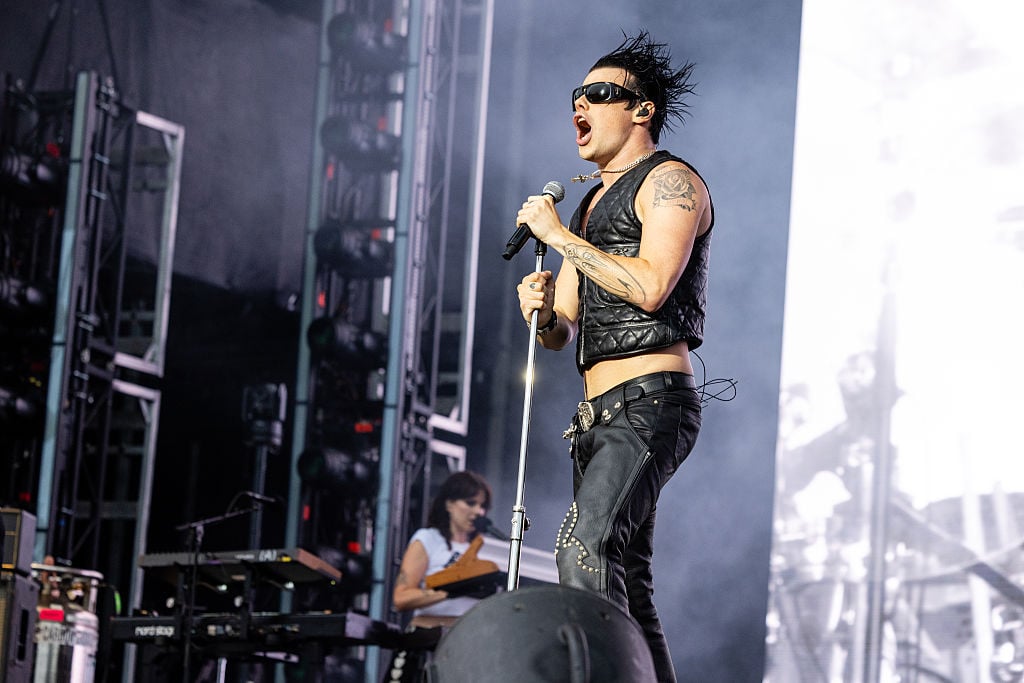
The Yungblud article shows the other side of that position. Published in June 2026, ‘Yungblud Isn’t An Industry Plant — The Internet Just Missed The Grind’ examined the musician’s release history, touring and industry support. Its conclusion distinguished professional backing from evidence of a secretly manufactured grassroots identity.
It appeared through The Blunt Truth, the publication’s evidence-led claim-review series. Its method identifies a specific claim, examines context and sources, separates important distinctions and explains a verdict of True, False, Misleading or Unproven. The stated process also includes source trails and correction pathways.
After an emotional BLUDFEST appearance in Czechia, Yungblud quoted the headline in a pinned Instagram comment. NME and Rolling Stone reported his response. It was a direct acknowledgment from the person at the centre of the argument, rather than a publisher’s claim about its own importance.
A related instinct informed BLUNT’s coverage of Amy Taylor’s photography dispute with Jamie Nelson. After the settlement, King’s commentary compared public statements with the court record, distinguishing the dismissal of one claim from the settlement of others rather than treating the proceedings as an uncomplicated victory for either side.
Taken together, these examples suggest an editorial identity more durable than permanent outrage. Independence can require questioning an institution’s account. It can also require questioning an accusation that a large audience has already accepted.
King adds: “We want BLUNT to be the outlet people know will tell it how it is. At a time when it’s becoming harder to know what to trust, that means asking better questions, following the evidence and being honest with our audience about what we know and what we don’t.”
Alternative as a perspective, not a perimeter
BLUNT 3.0 builds on that distinction. The publication’s account of its next chapter describes a wider cultural network encompassing music, film, gaming, technology, photography, creators and local communities. These are ambitions and developing products, not a claim that every destination is already operating.
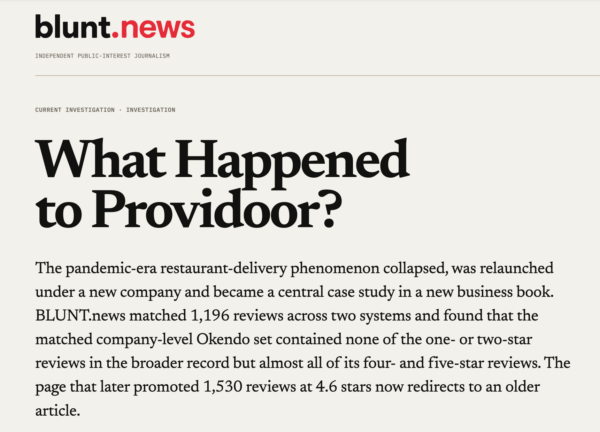
One expression of the broader remit is BLUNT.news. BLUNT describes its first major investigation, into Providoor’s collapse, relaunch and customer-review records, as an example of public-interest reporting that extends beyond conventional entertainment coverage.
The intended connection is cultural significance, rather than a rigid definition of what counts as underground. A small venue can matter. So can a mainstream artist, a game or a public controversy. The editorial distinction lies in the questions being asked, the evidence brought forward and the people given space to speak.
The network also aims to preserve and connect its archive with new work. Technology, including AI, is intended to help organise information and discovery. The stated priority remains human editorial judgement and accountable voices, rather than simply increasing the volume of interchangeable articles.
The history gives that ambition a recognisable starting point. The recent journalism offers examples of the perspective in practice. What connects the eras is not one particular sound, nor a refusal to cover anything popular. It is curiosity about the people, tensions and communities that give culture its meaning.
Under Culture Without Permission, BLUNT is attempting to turn that instinct into a larger publishing business. Music remains part of its identity. The culture surrounding it was always the bigger story.
The magazine once gave that perspective a place on bedroom walls. BLUNT 3.0 is about giving it a larger place in public life.

RNA Showgrounds, Brisbane.