



































At just 15 years of age, Sophie Payten experienced a revelation.
“Nothing had ever captured my interest as much,” she says now. “I thought it was really cool.” Those who know Payten as acclaimed folk-pop artist Gordi, the musician behind tracks like the layered ‘Can We Work It Out’, might be surprised to hear it wasn’t music that so struck a chord with her way back then – it was the human body. On that day, in the middle of a science lesson, Payten’s relationship with medicine began.
Not that music wasn’t there for her. “[It’s] always been there … I sort of never really thought it was a realistic option,” Payten says. She wrote her first song when she was 13, and performed in eisteddfods throughout her childhood. But even then, a career as a musician seemed – though not necessarily unattainable – simply not a workable goal. “Music has always been a fantasy,” she says.
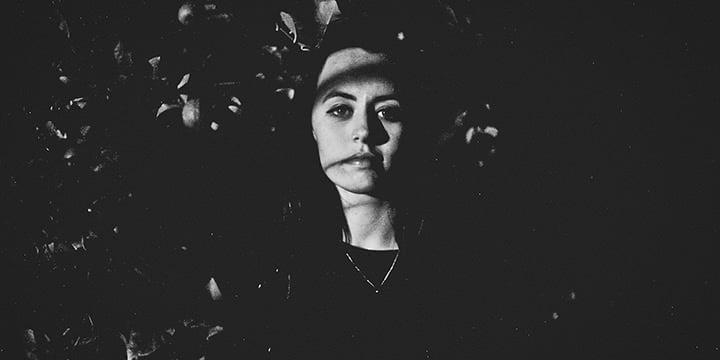
That was until 12 months ago, when Payten began “refining” the image she projected as Gordi. She began actively considering the press shots she used and the shows she played, working to create a cohesive sense of who she was as a musician. At the same time, she started uploading future folk numbers like ‘Nothing’s As It Seems’ and ‘Taken Blame’ to triple j Unearthed – songs that combine trembling acoustic work, dashes of electronica and Payten’s own striking voice.
But even as she sent her music out into the world, Payten was still not necessarily thinking about any kind of specific audience. The songs are “100 per cent” autobiographical, and Payten considers writing them a kind of therapy. Her music is deeply based within her own life, to the extent where her friends often grill her on the specifics of certain lyrics. “I’ve always thought that the best songs come from a real place,” she says. “It’s always telling some sort of story about something I’ve been through.”
‘Taken Blame’, in particular, is about “a really awful personal experience”, and writing the tune was part of her recovery. “Whether it’s grieving about a relationship or grieving about something else, it’s always for me a real part of the process,” she says.
That said, as Gordi started playing more shows, including international dates and appearances at the Bigsound conference in Brisbane, she did begin to feel a little strange about performing such emotive songs publicly. “I often think about how funny it is that it’s something that I started out doing for myself that lots of people are listening to … It is such a personal thing,” she admits.
But recent advice offered by a friend gave her a fresh perspective. Although the writing of the songs still has personal, cathartic significance, she accepts the tunes become something else when released into the world. “You’re putting this thing out there for [listeners] to interpret for themselves,” she says.
Payten often receives messages from fans through her Facebook page, as strangers reveal to her that her music has gotten them through a particularly rough time. It’s interactions like these that Payten relishes almost as much as the experience of playing live; that unique opportunity musicians get to deeply and significantly connect with their audience. “I really do love [performing],” she says, her voice full of very genuine warmth. “If things are getting a bit stressful, I just have to remind myself that if I wasn’t doing this, I wouldn’t get that chance.”
And, as Payten readily admits, things do get stressful. She’s now in her fourth year of studying medicine, juggling the dreaded med exams and headline concerts in Sydney and Melbourne. Although her busy periods as a musician always seem to overlap with the pressures of standardised testing, she says it’s all manageable. In fact, in some ways, it’s a blessing. Upon her return from a recent stint at CMJ in New York, she realised how much she had missed the normality one has to abandon on tour. “I loved the experience, but weirdly enough it made me sort of realise that I do want a job,” she says. “Not a five-day-a-week job, just something normal to come back to.”
Her plan – she laughs at the suggestion it might be “concrete” – is to release her debut EP in February next year, return to studies, and then eventually take some time off from uni in order to really promote the work. She’s proud of the EP, and as a self-described “big picture” person, took joy in constructing the finished whole.
“On any sort of record you have big moments and little moments, and I feel like we’ve done that with the tracklist we’ve got.” Indeed, the release will be something of a summation of her work over the last year. “An EP needs to be a cross-section of what you represent,” she says.
It always comes back to the work for Payten. Amid the award nominations, the critical notices and the stresses of juggling medicine and music, what matters are the songs and why she writes them. She still thinks back to being 13 and the music she wrote then; the ability it gave her to manage what she might not have otherwise been able to manage. Not much has changed after all.
“That’s what it’s always been about,” she admits with a gentle laugh. “Getting through something.”
Head along to Goodgod Small Club on Thursday December 10 for Gordi’s gig.